When a Virginia planter arrived in Harrisburg in 1850, he claimed two Black men were fugitive slaves who belonged to him. After having them arrested, he and several other whites carried out a brutal attempt to seize the prisoners in the Dauphin County jail’s vestibule, in full view of a largely African American crowd, sparking some in the crowd to resist.
On August 17, 1850, William Taylor and George H. Isler, two planters from Clarke County, Virginia, stepped into the office of Henry Beader, a Harrisburg magistrate. The southerners asked Beader to order the arrests of George Wilson, Samuel Brooks, and a man named Billy, three Black men they had spotted earlier in Market Square. Wilson and Brooks, Taylor said, were his slaves who had escaped from Virginia on his horses a few weeks earlier. Billy belonged to a “Mr. Page,” another Virginian who was not present. Beader then issued warrants for the men’s arrest on charges of horse theft.
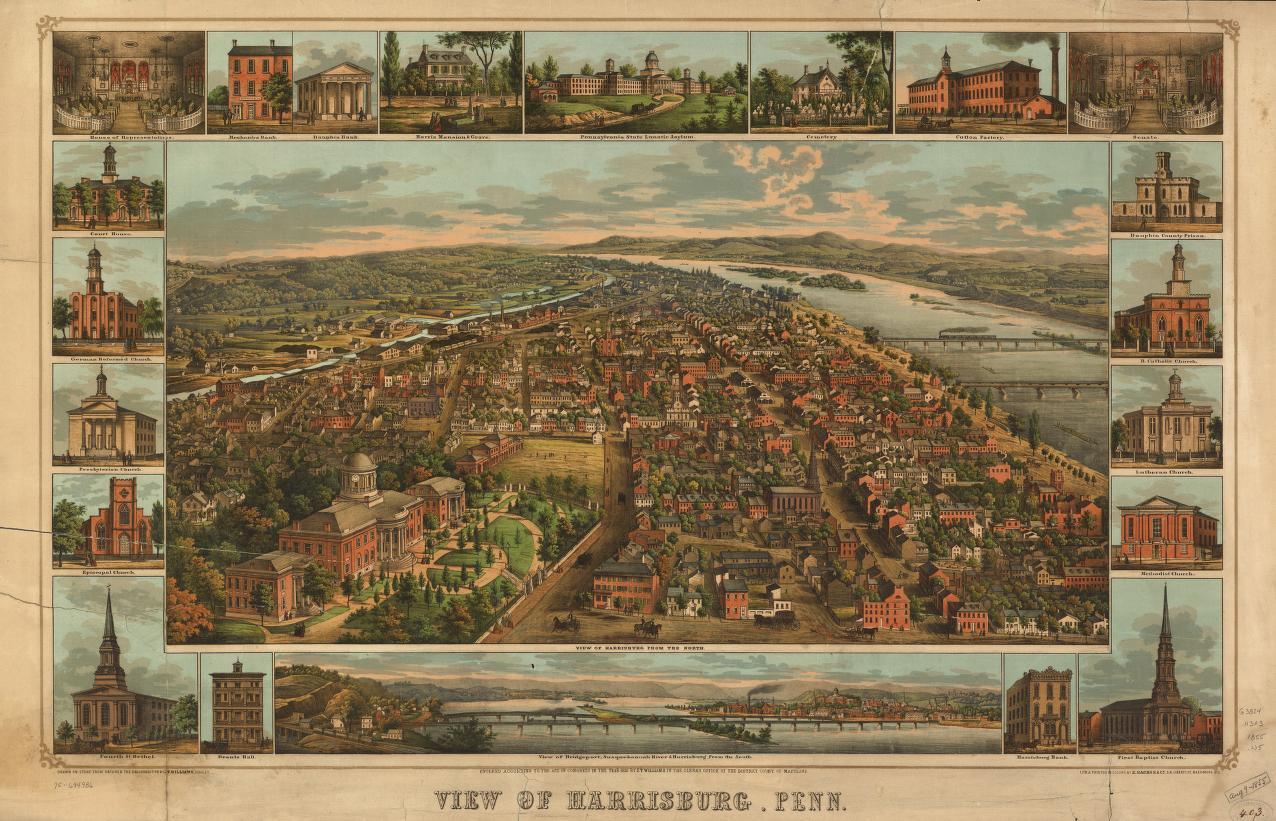
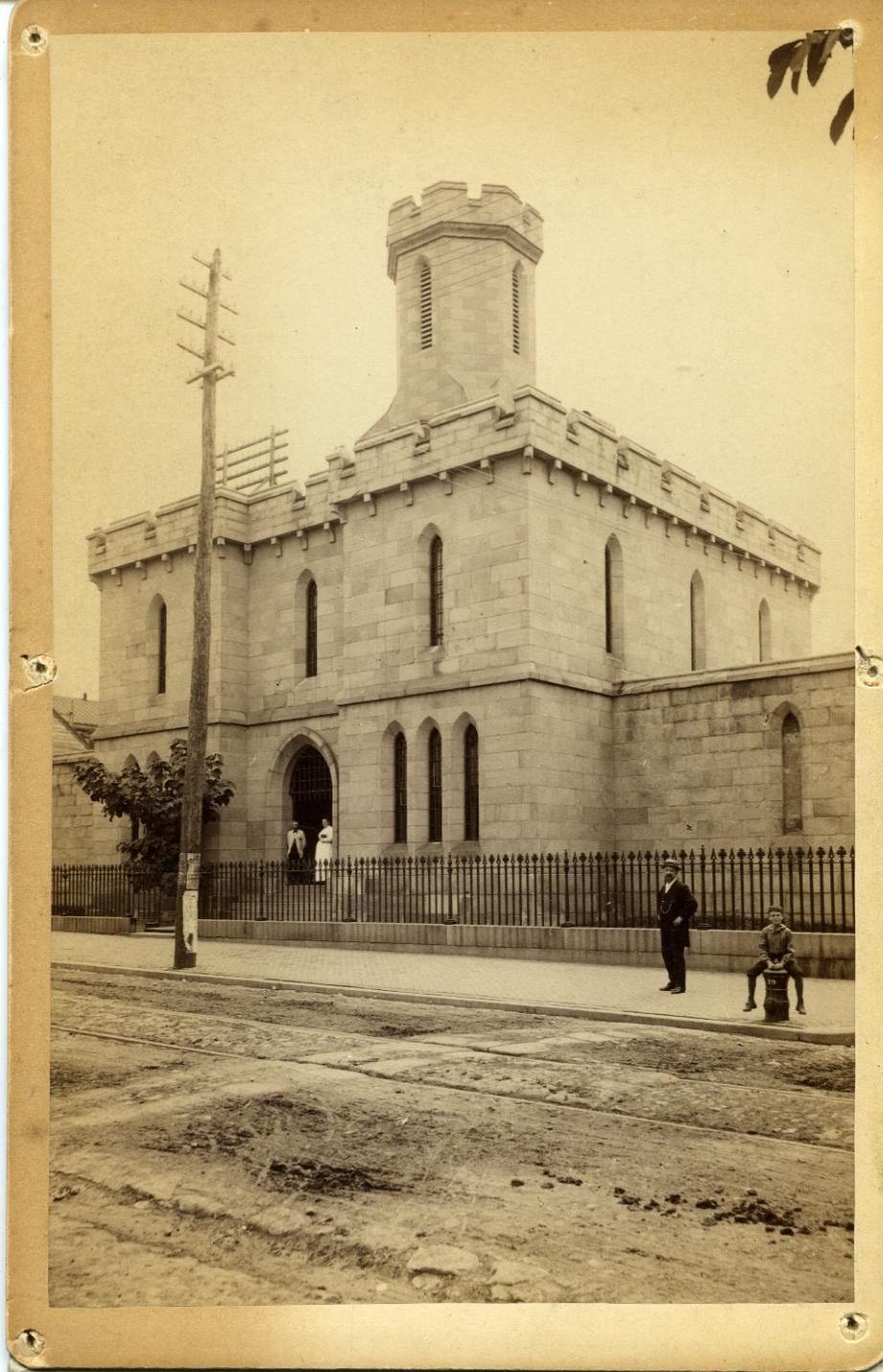
The one-armed constable Solomon Snyder dutifully carried out the warrants, and the three men were committed to the jailhouse at the corner of Walnut Street and Court Street. Three days later, on August 20, a writ of habeas corpus was issued on their behalf. William M. Jones, whose home served as an important station on the Underground Railroad, and Edward Thompson, a thirty-four-year-old “mulatto,” hired anti-slavery Harrisburg attorneys Charles C. Rawn and Mordecai McKinney to represent the alleged slaves.
Although framed as horse theft, Taylor likely used the charge to detain the men while he secured court authorization to return them to Virginia. Only after Beader, the magistrate, refused to arrest them as fugitive slaves, probably due to an 1847 Pennsylvania law that barred state officials from assisting in the return of fugitives, did Taylor pursue theft charges instead.
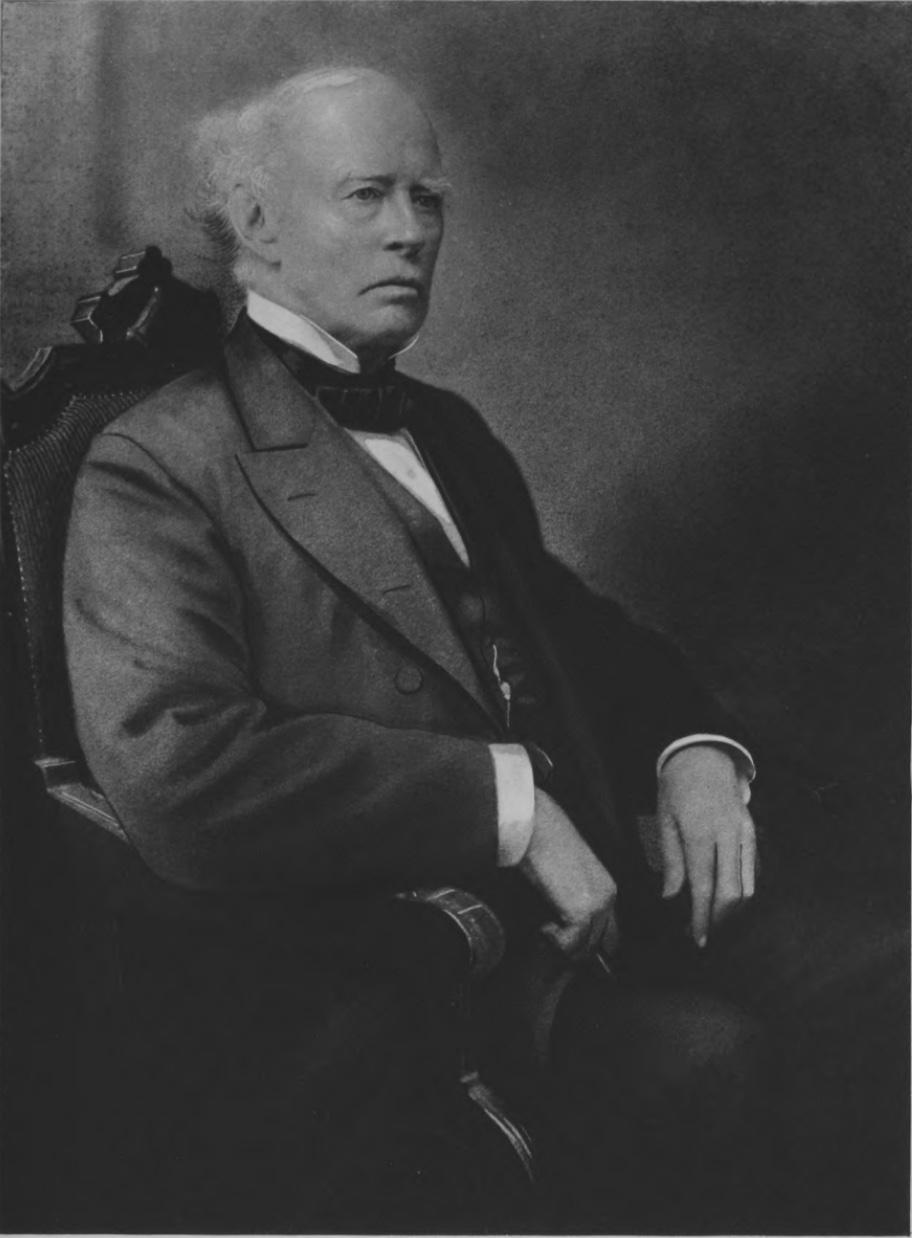
On August 23, Judge John James Pearson heard testimony from both parties. Taylor said Wilson, Brooks, and two brown mares went missing on the night of July 21, a claim the defendants disputed by presenting witnesses who testified that the three men were already in Harrisburg before the date they purportedly fled Virginia. Nevertheless, Judge Pearson ruled the next day that Wilson, Brooks, and Billy were indeed slaves who had taken the horses to aid their escape. But the judge reasoned that because the mares were left where Taylor could retrieve them, the men had only intended to use them temporarily to aid their escape. Hence, they were not guilty of larceny, and Pearson ordered them released. The judge, however, affirmed Taylor’s right to capture them, though he prohibited him from doing so in court.
Taylor didn’t miss a beat. As the prison’s underkeeper was still preparing the discharge, Taylor and a half-dozen white men he had brought to assist him waited for the prisoners in the jail’s vestibule. At the same time, knowing what was about to happen, a large crowd, mostly African Americans, had gathered outside the jail. “All the avenues leading to the prison were filled with men, women, and boys, of all colors,” wrote the Philadelphia North American.
As the jail door leading into the vestibule opened, one of the white men shouted, “They are coming.” John T. Wilson, the prison keeper, swept the prisoners towards the enslavers and promptly shut the door. “Did not wish to see anything,” he later said. When Taylor’s group grabbed the men, one resisted. Then the beating started. Striking blow after blow, the enslavers viciously caned the prisoners to the ground until one cried out that he was being murdered.
The crowd, watching the brutal beating unfold through the vestibule’s outer iron gate, grew frenzied. Some picked up stones and bricks and lobbed them towards the prison. A woman named Ann Pool threw an old bowl, which severely injured a man’s eye when she accidentally struck him in the face.
Help for the three men inside the vestibule, however, would come from a thirty-one-year-old Black man named Joseph Popel. Sprinting up the prison’s stone steps, he pried open the iron gate and launched himself into the fray. Although Popel fought tenaciously—one newspaper said that had there been three more like him, they all would have escaped—the enslavers’ superior numbers soon overpowered him. He received a “tremendous beating,” and emerged from the vestibule “bloody as a butcher.” Popel’s entrance, however, diverted the enslavers’ attention long enough for Billy to slip out into the street. Running like a “deer,” Billy was followed by twenty Black men who, shouting encouragement, pushed him up Walnut Street and over Capitol Hill, where he disappeared.
As the crowd pressed towards the prison and threatened to erupt into disorder, the deputy sheriff called for a company of militia. Fifty men received arms at the arsenal and marched in double rank to the jail. Meanwhile, the court instructed the constables to lock the prison gate to prevent anyone else from getting inside. Wilson and Brooks struggled against their enslavers for fifteen to twenty minutes before succumbing. Lying on the ground in handcuffs, “left bleeding and almost senseless,” the two were in Taylor’s possession.
Taylor’s triumph did not last long. The court ordered the arrest of everybody inside the prison, Black and white, for assault and battery and intent to incite a riot. The court also ordered the arrests of five Black members of the crowd, including William M. Jones and Joseph Popel. As for Wilson and Brooks, their situation would alter for the worse with the passage of the Fugitive Slave Act on September 18.
The new law empowered federal commissioners to hear cases involving fugitives. Commissioners often found that a claimant’s testimony was sufficient proof of ownership. The commissioner in Harrisburg was Richard McAllister, who once bragged that “more fugitives have been remanded by me than any other U.S. Com[missioner].”
On September 30, the first day of McAllister’s appointment, Taylor brought Wilson and Brooks before the new commissioner for a hearing. Along with a witness, he swore these men were his slaves. This oath was sufficient for McAllister to send the prisoners to slavery. Charles Rawn, the attorney who represented them, was powerless. “The law is an abomination, and the hearing a farce,” he wrote in his journal. To prevent a repeat of the unrest that had occurred a month earlier, McAllister ordered a posse, funded by the federal government, to see the men back to Virginia.
In November, a jury found Taylor and the other white men innocent of all charges. After a group of leading citizens submitted a petition asking for leniency, the charges against the Black men involved in the unrest were also dropped.
The case of Samuel Wilson and George Brooks was one of the first in the country to be tried under the Fugitive Slave Act. As they headed south as enslaved men, their fate was an early example of the law’s unjust treatment of African Americans, and the battle that would be waged against it.
In an article titled "Flagrant Defiance of the Fugitive Slave Law of 1850," Esther Popel Shaw, daughter of Joseph Popel, remembered her father's efforts to assist the three Black men at the prison. Describing her father as "a peaceful, inoffensive citizen, worked up . . . to a perfect frenzy of excitement by his desire to rescue these slaves," Shaw's account is a reminder of the immense courage of Harrisburg's ordinary citizens to contest oppression and protect the enslaved.
A full list of resources used in this story can be found here.
Images